A Paramedic Collaborating with Researchers
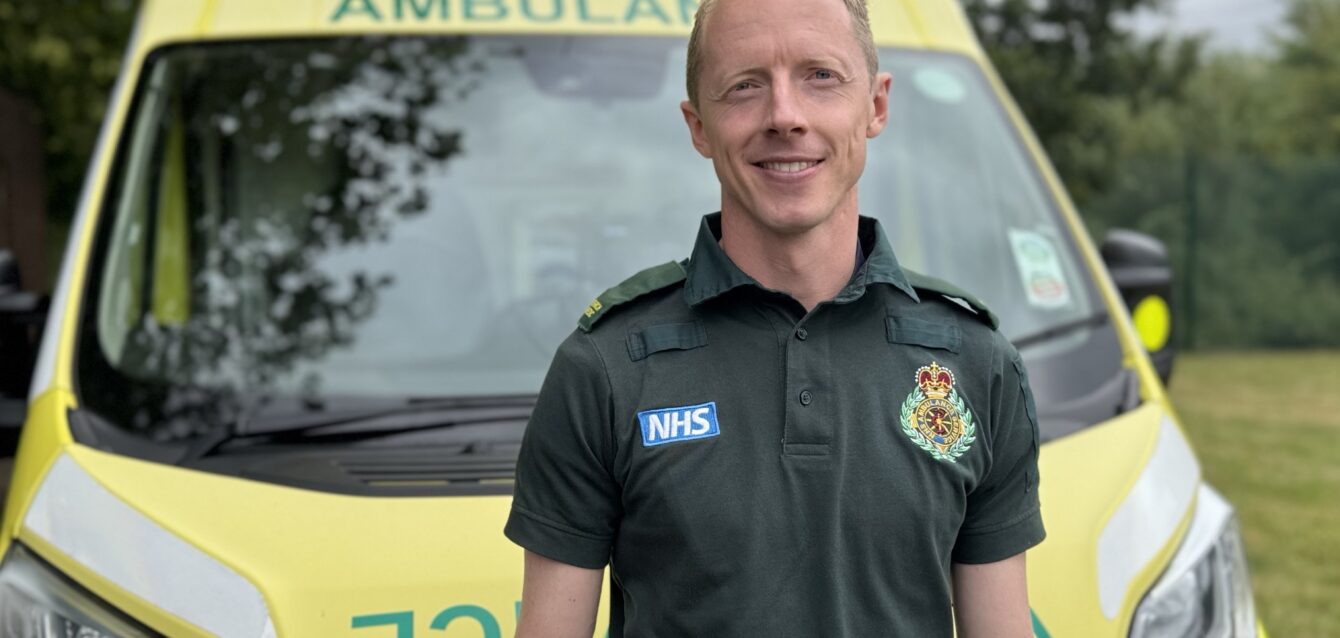
Adam works as a paramedic with the North West Ambulance Service (NWAS), where he specialises in research. As part of the NWAS research team, he supports studies aimed at improving patient care in the future. His work sits at the intersection of frontline ambulance response and clinical research, an increasingly important space within emergency medicine.
What Is the PRONTO Study?
Among the projects Adam is involved with is the PRONTO study, short for Pre-hospital Biomarker and Phone Call Based Detection for Ischemic Stroke Thrombectomy. Despite its lengthy name, the concept is straightforward.
The study is testing the LVOne fingerprick biomarker test paired with enhanced communication to rapidly identify LVO strokes among the target participants in the ambulance before hospital arrival. It explores a new method for identifying patients experiencing a specific type of stroke, one caused by blood clots forming in the brain’s large arteries. For these patients, receiving specialist treatment quickly gives them the best possible chance of a full recovery.
Testing a Faster Way to Detect Stroke
PRONTO investigates whether a simple finger-prick blood test, combined with direct communication between ambulance clinicians and hospital staff, can help identify these stroke patients earlier than current methods allow. By potentially speeding up detection in the pre-hospital setting, the study aims to help get the right patients to the right specialist care faster.
Innovation Through Integration
For Adam, the PRONTO study is an opportunity for bringing together research teams, ambulance services, and stroke specialists in a shared effort to improve outcomes for patients. Rather than research happening separately from frontline care, studies like this integrate the two, using the insight of practising paramedics to shape how future patients are treated. His work is a reminder that ambulance staff contribute not only through emergency response, but also through the research that helps drive innovation in patient care for years to come.
Are you a paramedic? If you’d like to share your story and be featured, comment below!