

A recent report highlighted by The Guardian has raised alarms about a major gap in stroke care across England: thousands of stroke patients are being denied access to a life-saving treatment due to limited availability and systemic inequalities.
This “miracle treatment” refers to mechanical thrombectomy, a procedure that removes blood clots from the brain and has been proven to drastically improve survival rates and reduce long-term disability — but only if performed within a few hours of stroke onset.
A Treatment That Saves Lives — But Not Equally Available
The report underscores that while thrombectomy is highly effective, its success depends entirely on how quickly a patient is diagnosed and transported to a specialised stroke centre. Unfortunately, access to these centres remains limited across much of England.
According to the study:
- Only 24 specialist hospitals in the UK are currently equipped to perform thrombectomy.
- Many stroke patients are first sent to general hospitals with no thrombectomy capability, leading to critical delays.
- Others never reach appropriate care at all due to lack of coordination or resources.
As a result, many patients are suffering avoidable disability, complications, or death — not because treatment doesn’t exist, but because they can’t access it in time.
Urgent Call for Systemic Reform
The report calls for immediate action to improve access to thrombectomy and stroke care, including:
- Increased investment in stroke services
- Improved paramedic training and pre-hospital triage
- More specialised stroke centres
- Faster diagnostic tools for ambulance and frontline care
“Prompt access to thrombectomy can be the difference between a full recovery and lifelong disability. No patient should miss out due to postcode or lack of resources.”
The findings also emphasize regional inequalities. While some parts of England have streamlined stroke pathways and timely access to thrombectomy, others lag behind, leaving patients with fewer options and worse outcomes.
Why It Matters to Us
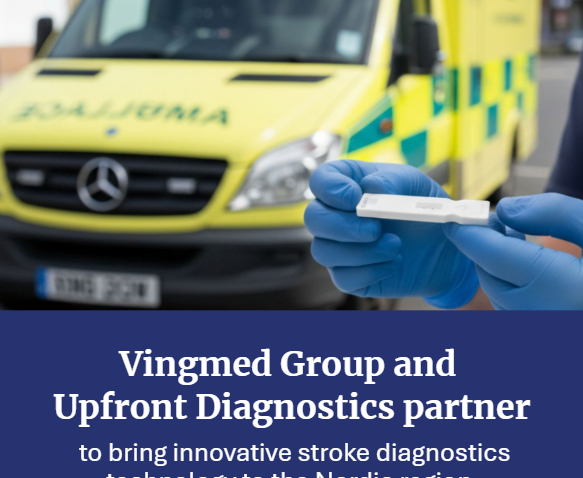
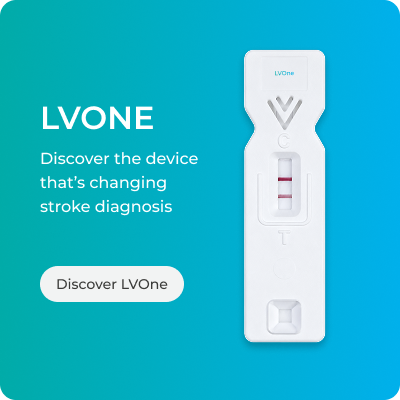
At UpFront Diagnostics, this report further validates the urgent need for point-of-care diagnostic tools like LVOne, which can help emergency responders rapidly identify Large Vessel Occlusion (LVO) strokes — the type that qualifies for thrombectomy.
LVOne aims to bring fast, accurate stroke diagnosis to the field, empowering paramedics to:
- Identify eligible patients early
- Prioritise transfer to specialist centres
- Save time — and lives
We believe innovations like LVOne are part of the solution to the crisis outlined in this report.