

Stroke does not announce itself politely. It arrives abruptly, often without witnesses, and demands decisions in minutes. Yet the earliest clinical signs can be ambiguous, particularly outside specialist settings. For health professionals on the frontline, the challenge is not only speed, but certainty—distinguishing the type of stroke to change outcomes.
In the first moments of suspected stroke, clarity is as critical as speed. But achieving both, consistently and early, remains one of the field’s most persistent challenges.
Rethinking what the blood can tell us
This is where the conversation is shifting. Beyond imaging and clinical assessment, attention is turning to what the blood can reveal in those critical first moments. Blood biomarkers—long explored, often debated—are now re-emerging with renewed clinical relevance. Advances in assay sensitivity and translational research are beginning to bridge the gap between laboratory promise and real-world utility.
What was once largely confined to research settings is now edging closer to frontline care—reshaping how clinicians think about early detection.
From insight to impact in clinical pathways
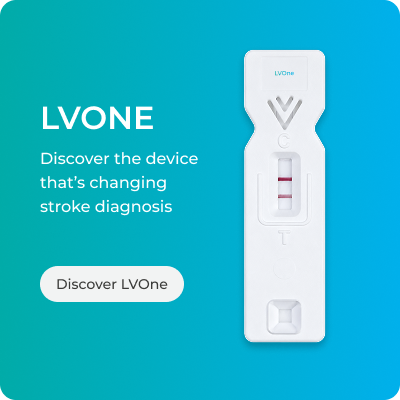
 The implication is not incremental; it is structural. If the type of the stroke can be identified through a rapid blood test, pathways could be improved around earlier triage, faster treatment decisions, and more precise allocation of resources. Not to replace existing tools, but to strengthen them—bringing diagnostic clarity closer to the patient, wherever they present.
This shift is about more than innovation—it is about upgrading care to meet the realities of time-critical decision-making.
A question of when, not if…
The question is no longer whether biomarkers have a role in stroke management, but how soon they can be integrated meaningfully into care.
As evidence builds and technologies mature, the next chapter in stroke diagnosis is already beginning to take shape.