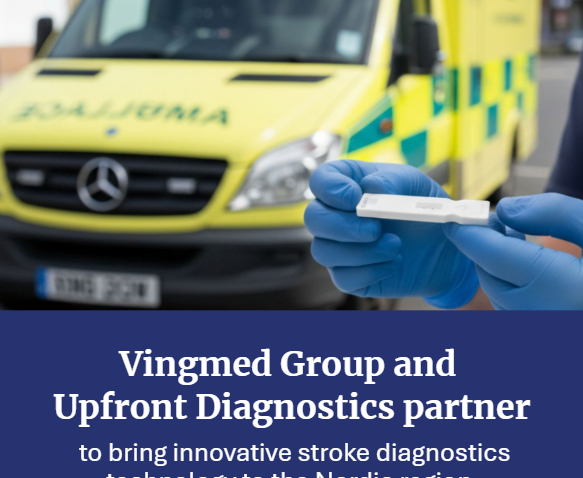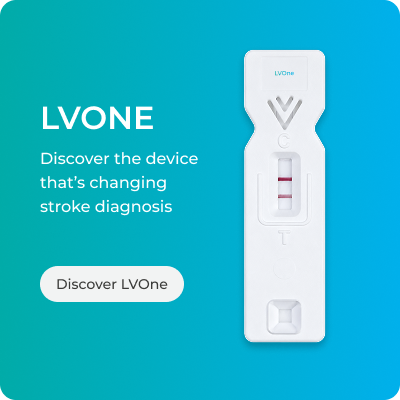


Ambulance crews in Cambridgeshire are piloting the use of LVOne, our rapid finger-prick blood test, to diagnose Large Vessel Occlusion (LVO) — the deadliest form of stroke — before patients reach the hospital.
Preliminary findings suggest the test may be twice as effective as traditional symptom-based methods in identifying LVO in pre-hospital settings.
A Faster Path to Life-Saving Treatment
LVO strokes make up about one-third of all strokes but account for 95% of related disability and mortality. The gold standard treatment is mechanical thrombectomy, which must be delivered within 4 to 6 hours of symptom onset — ideally much sooner.
Yet, because LVO is difficult to diagnose without imaging, and only 24 hospitals in the UK offer thrombectomy, most patients experience delays while being transferred from general hospitals.
“Early identification of LVO strokes by ambulance clinicians could offer opportunities for fast-tracking patients to thrombectomy-capable hospitals,”
— Larissa Prothero, Advanced Research Paramedic, EEAST
The East of England Ambulance Service NHS Trust (EEAST) is now piloting LVOne in south Cambridgeshire, assessing feasibility and safety for routine ambulance use. The trial data will support future regulatory evaluation in the UK.
How LVOne Works
LVOne uses two lateral flow cartridges, similar to COVID tests, to detect:
- D-dimer — a clot-related protein that indicates ischaemic stroke
- GFAP — a protein related to brain bleeding; its absence helps rule out haemorrhagic stroke
This allows ambulance crews to distinguish between LVO, haemorrhagic, and non-LVO strokes within 15 minutes, with studies showing up to 90% accuracy.
“That’s more than double that of current methods used in the ambulance, which involve checking symptoms,”
— Gonzalo Ladreda, CEO, UpFront Diagnostics
Clinical and Economic Impact
According to Dr. Louise Flanagan of the Stroke Association:
“Having a rapid test in the ambulance could get the patient the right treatment faster, saving brain cells and hopefully reducing long-term disability.”
In addition to clinical benefits, the test could lead to substantial NHS cost savings:
- Fewer unnecessary transfers
- Reduced imaging demands
- Lower long-term rehabilitation and care needs